Story audio is generated using AI
Almost 55,000 people have already had a shot that protects them against HIV for six months at a time, the health department says.
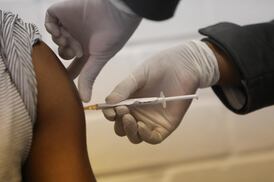
Lenacapavir, or LEN, has been available through the health department since June. The injection gives near-perfect protection against HIV, and because it lasts for six months, people only need to return to a clinic twice a year.
For now, LEN is available at 360 government clinics — about one in 10 — across six provinces: Gauteng, Mpumalanga, Eastern Cape, Western Cape, KwaZulu-Natal and North West.
It will be expanded to other provinces when cheaper generic versions become available next year.
Modelling shows that between one and two million people would need to use LEN each year between now and 2043 for the injection to make a big enough dent in new HIV infections to help end Aids as a public health threat.
For now, the health department is focusing particularly on people who have a higher chance of getting HIV: teenage girls and young women aged 15–24, sex workers, transgender women, gay and bisexual men and other men who have sex with men, and pregnant and breastfeeding women.
We spoke to four people from groups the roll-out is particularly trying to reach: a sex worker, a student, a pregnant woman and a transgender woman.
Precious Mafanga, 39, Langa
Caption: Switched: Precious Mafanga got switched from a daily HIV prevention pill to the injection. (Mia Malan)
I’m a mother of four, a wife and a sex worker.
I’m also a peer educator, where I help other sex workers with their health and other needs.
In our work, time is money. We rent rooms for R500 a day, so sometimes we’re chasing minutes. On a good day, it’s one client after another. You can easily make more than R1,500.
But on a bad day, you might not even make enough to pay the rent. Then there’s pressure to agree when a client offers you more money for sex without a condom. You pay the rent and start all over again the next day.
I got my LEN injections in June.
While I was waiting, my phone kept ringing. Clients were calling, and I wanted to leave to see them. But I stayed and got my injections.
Before LEN, I took the daily HIV prevention pill for four or five years. It wasn’t easy. You have to remember to take it every day.
With LEN, I don’t have that worry. The medicine stays in my body for six months, so I only have to go to the clinic twice a year.
As a peer educator, I help link other sex workers to clinics where they can get HIV prevention medicine without being judged. When US funding cuts disrupted outreach services, many of our sisters stopped taking their daily prevention pills. Some later tested positive for HIV.
That’s why LEN is so important for us.
But we still hand out condoms because LEN doesn’t prevent pregnancy or other sexually transmitted infections.
Siviwe Gaika, 24, Gqeberha
Caption: Third time lucky: Siviwe Gaika had to visit the clinic three times before getting her LEN jab. (Mia Malan)
I’m studying towards a law degree at Nelson Mandela University. It’s my second degree.
Before LEN, I wasn’t using HIV prevention medicine because the only option I knew about was a daily pill. My life is busy: if I’m not in lectures, I’m studying or working. Taking a pill every day would have been one more thing on an already long to-do list.
So when I heard about LEN, I thought, if I only have to go to the clinic and deal with the nurses twice a year, I can do that.
I got my shot in June.
I was told there wasn’t a nurse trained to give LEN. The second time, staff said the clinic didn’t have a certificate to prescribe it.
I went back in early July and finally got my shot.
The nurse who gave me the injection was patient. She explained how LEN works, that I could choose between the daily pill and LEN, and what side effects I might have.
She also got me to set a reminder on my phone to take the two LEN pills I needed the next day.
I deliberately took the pills in public because I wanted someone to ask me what I was taking. I was in the library when my alarm went off. One person came over and asked about the pills, so my plan worked.
I also recorded myself taking them and posted the video on TikTok. I told people what I was taking and how long it took me to get LEN — because four hours is a long time to wait.
I told them about the two bumps I got under my skin where I was injected, too. I couldn’t wear jeans for about two weeks and had to take a break from the gym. But the bumps gradually got smaller, and they don’t bother me anymore.
That’s been my journey.
Lindiwe Mqatazana, 25, Gugulethu
Caption: (Mia Malan)
I’m 25 and a waste picker.
In July, I suspected I was pregnant, and the test came back positive. I decided there and then that I wanted to start LEN.
There’s an unborn child now, so I have to stay safe for him or her.
The nurse explained that LEN is safe for me and my baby. After I tested negative for HIV, she told me I could choose between the six-monthly LEN injection and the daily HIV prevention pill. I chose LEN.
I had used the daily pill before, but it made me feel nauseous. I also travel home to the Eastern Cape often. When you’re on the road, it’s easy to forget your tablets.
Getting LEN was easy. I went to the clinic early in the morning so they could see me straight away. From walking in to walking out, it took about an hour and a half.
The nurses used ice to numb the injection sites for about 10 minutes. My friends are scared of LEN because they think it has to be injected into your stomach. But because I’m pregnant, the nurses injected it into my buttocks.
I can feel a small bump under the skin on my left buttock, but I haven’t had headaches or other side effects.
As young women, we often don’t use condoms. We date. But everything has changed for me now that I’m pregnant.
I think I’ll tell people at work about LEN too, because some of them are in danger.
Dimpho Tsotetsi, 32, Soweto
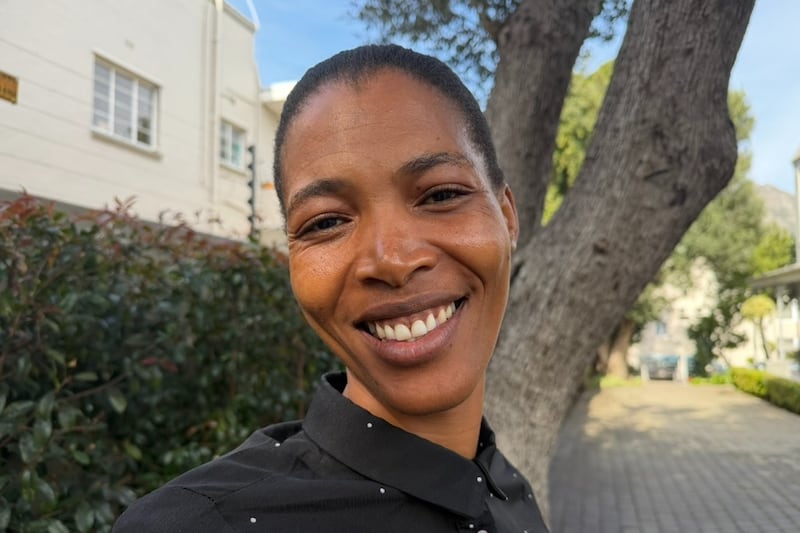
Caption: Dimpho Tsotetsi (Mia Malan)
I’m a trans woman and work as a peer educator.
I got my LEN shot on 1 July at Chiawelo Clinic in Soweto.
First, I had to join the general queue to get tested for HIV. Once I tested negative, I could move to a special LEN queue.
The nurse gave me two LEN tablets. About 30 minutes later, I got two injections, one on each side of my tummy.
I have a small bump under my skin at each injection site. [LEN forms a depot under the skin, which slowly releases the medicine over six months.]
The bumps bothered me at first. I normally wear a waist trainer, but it was uncomfortable for about a month.
Before LEN, I took the daily HIV prevention pill for nine years. I struggled to take it consistently. You get pill fatigue. You also have to remember to take your pills with you when you go out or travel.
So I’m definitely going back for my second LEN shot after six months. LEN makes my life simpler.
Bhekisisa Centre for Health Journalism