
Story audio is generated using AI
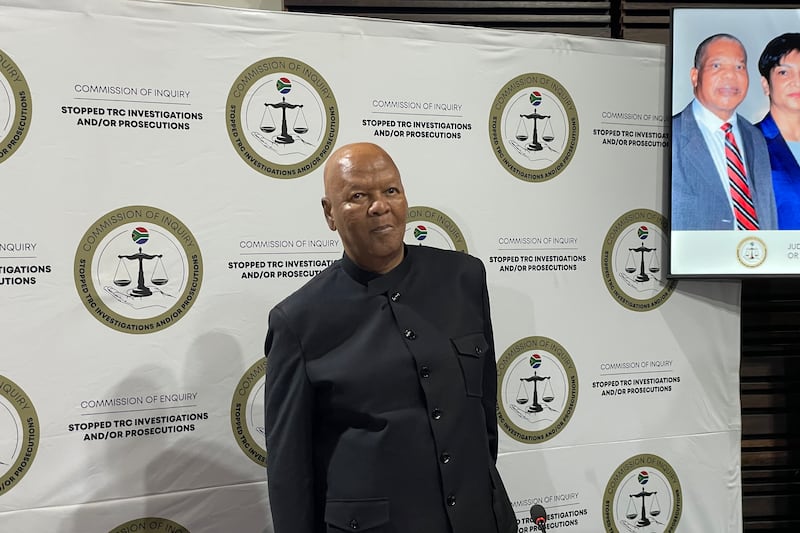
Former justice minister Jeff Radebe says the government’s attitude towards apartheid-era perpetrators who did not submit themselves to the Truth and Reconciliation Commission (TRC) was that they were supposed to be prosecuted, but some remain free.
Radebe made the remarks during a heated cross-examination at the Khampepe commission of inquiry when advocate Howard Varney questioned whether apartheid-era perpetrators were adequately prosecuted after the TRC.
Varney represents the Calata group, who lost family members during apartheid.
According to Varney, cabinet decisions and proposed policy changes reflected a government attempt to control the remaining TRC cases.
Former minister of justice Jeff Radebe has arrived at the Truth and Reconciliation commission inquiry where he will be cross-examined. He first appeared at the hearing in July.
— Sowetan (@Sowetan1981) September 22, 2026
Video: @Koena_xM pic.twitter.com/zC76uOpiri
Radebe said he could not recall specific details and was not the responsible justice minister at the time.
“I wasn’t really focused on the justice clusters. I was one of the co-ordinating ministers of the economic cluster, so I can’t recall the specifics of what it was about,” he said.
He acknowledged being aware of an amnesty task team, but said he could not provide details of the dynamics that influenced the cluster.
“Not that I don’t have knowledge, but I cannot indicate specificity of what the dynamics were that influenced the cluster to come up with this initiative,” he said.
Former justice minister Jeff Radebe has conceded that the families of victims killed during the apartheid era have the right to justice and may be entitled to some form of compensation.
— Sowetan (@Sowetan1981) September 22, 2026
Video: @Koena_xM pic.twitter.com/0QVz7gD7qO
Appointed in February 2004, the amnesty task team evaluated whether the National Prosecuting Authority should prosecute past conflict cases, introduce further amnesty, or make legislative changes.
Varney put it to Radebe that the process amounted to an attempt to give perpetrators additional opportunities to avoid prosecution after the TRC’s amnesty process.
Radebe rejected the suggestion that he was the appropriate person to answer for the decisions.
“I think we are asking the wrong person. I was not a minister of justice,” he said. “I was not an MP at the time. The question might as well be posed: the whole Truth and Reconciliation Commission, how was it conceptualised?”
Radebe pointed to his own experience of the TRC amnesty process.
“People committed crimes, but there was a specific process that was agreed on for people to come to tell the truth, as I did. I got amnesty instead of being charged for the ‘crimes’ I committed during that time,” he said.
Former justice minister Jeff Radebe being asked about apartheid-era cases, including the Sharpeville Massacre. Radebe said he cannot speak about decisions taken when he was not justice minister but says it is clear that some perpetrators of apartheid-era crimes remain to this… pic.twitter.com/rPD6WjfDIi
— Sowetan (@Sowetan1981) September 22, 2026
Varney, however, distinguished between the original TRC amnesty process and the later measures the inquiry is examining.
“We’re simply talking about the attempts to introduce further measures to what we would submit to this commission were endeavours to assist perpetrators to escape justice post the TRC’s amnesty process,” Varney said.
Radebe said he could not take the argument further.
“I can’t take it further than what I’ve just said. I’ve been repeating myself,” he said.
Radebe then turned to what he said was the government’s broader policy position.
“In 2003 the president made the first parliament, where he outlined a clear policy attitude of the government to these matters that those that did not submit themselves to the TRC process must be prosecuted.
“It’s very clear to them. This, to me, does not reflect the attitude of the government at the time to not submit to justice.”
Sowetan








Would you like to comment on this article?
Sign up (it's quick and free) or sign in now.
Please read our Comment Policy before commenting.