
A tender to buy fire trucks for Joburg has been stuck in back and forth talks between the city and the contracted company for the past 12 months and not a single vehicle has hit the streets.
The city is running short of 40 emergency vehicles while the public safety department needs to attend to about 100 fires a month, according to statistics.
In January, then mayor Mpho Phalatse announced that Marcé Fire Technology would start building 17 fire engines after they were awarded the tender last year.
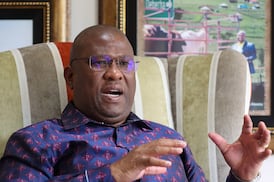
But the contract has not progressed because the city is still waiting for a bank guarantee certificate from Marcé, MMC for public safety Mgcini Tshwaku said last week.
The certificate is issued by a bank that vouches that the company’s suppliers will get paid for the goods or services provided to the company in the event that the company itself can’t pay.
This is usually done when a company is working with a client that does not want to offer trade credit or when a company is in start-up mode. Marcé, a multinational company, has been in business for over 20 years.
On Thursday, Tshwaku said the company was given until today [May 15] to produce the certificate, failing which the tender would be re-advertised. Former MMC for group corporate & shared services Leah Knott said it appeared that the ANC-EFF administration was reluctant to work with Marcé.
“We initially were supposed to launch in December, particularly because Joburg had not procured fire engines in over a decade. The adjudication committee and various officials said we could not launch as there were problems with the contract and all sorts of things, ” she said.
“I sat with them almost everyday trying to iron things out, but some of the things they fought against didn’t make sense.“
There were these minor issues they were fighting, an example of that would be a clause by Marcé that stated that if they started manufacturing and the City of Joburg decided to cancel six months into the contract, whatever they have produced so far, the city would cover financially.
“That’s a standard clause. You’re not going to build a car for somebody and halfway through it they then cancel the contract and now you sit with half the car that you have incurred costs on,” said Knott.
She said after some of the issues were ironed out, including the bank guarantee, a launch was planned for January, but not without contestation again, but she said with the support of Phalatse, it went ahead and the service level agreement was signed
“They did not have any proof that there was anything wrong with the tender. This tender was awarded in May 2022, it was then signed in August 2022. Since then until January they had been trying to put off the launch, understanding that we (DA) were facing a motion of no confidence in January.”
“So, I could see this political power play behind the scenes...I don’t know what this reluctance to work with Marcé is, but they are one of the big businesses, that’s why most of government departments work with them. They contract with Transnet, the City of Cape Town and others.”
Yesterday, one of Marcé directors, Masilo Diale, said he was aware of the request for the certificate by the city but would not comment further. A year ago, the city announced it would buy 17 firetrucks by May 2024. The city currently runs on 16 engines for their 30 stations. EMS spokesperson Robert Mulaudzi said the shortage of vehicles delayed their response time to fire.
“The risk analysis conducted requires the city to have 92 fire and rescue vehicles, which is a combination of 13 different categories. Each fire station must have one fire engine supported by the other different categories from the required 92. “The current [fleet] is 52,which leaves the city with a shortfall of 40,” said Mulaudzi.
He said the city experienced about 1,500 fire incidents in a year and between 100 and 120 fire incidents in a month, most of which occurred in informal settlements.
“We want to reassure our residents that we will be able to effectively respond to all fire incidents reported throughout the City of Johannesburg this winter with the limited resources we have, hence we have strategically placed them in all our high-risk areas so we can effectively respond in case we have a major incident which might require more resources. We have a memorandum of understanding with Tshwane and Ekurhuleni to assist us.”
sibiyan@sowetan.co.za



Would you like to comment on this article?
Sign up (it's quick and free) or sign in now.
Please read our Comment Policy before commenting.