
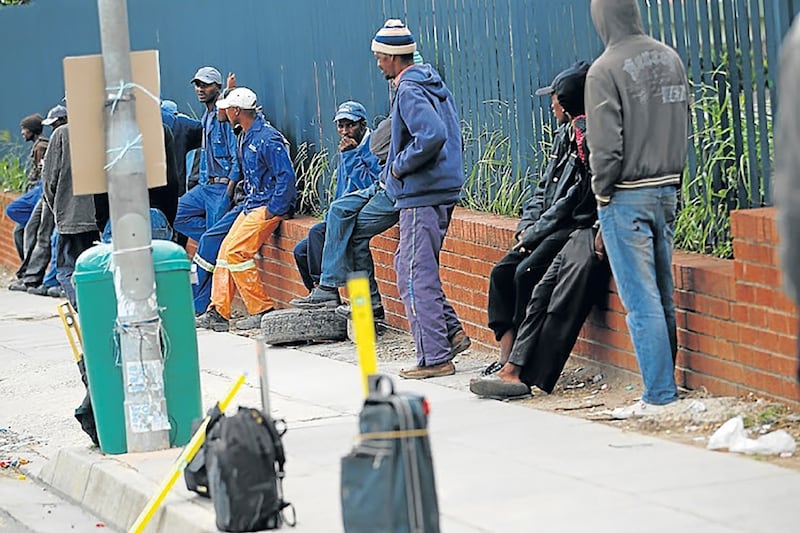
This year marks 25 years since the Durban Declaration — and the objectives are still as clear as they were in 2001.
This declaration, which was adopted during the UN World Conference, was an affirmation attempting to fight against racism, racial discrimination, xenophobia and related intolerances. However, in 2026 the affirmations still stand and the goals are still the same, but they feel harder to achieve.
The growth of economic insecurity in South Africa has taken place through systemic, personal and macroeconomic factors such as:
- unemployment;
- structural inequality;
- underemployment;
- failed government support;
- inflation; and
- high costs of living.
In 2001 unemployment was a source of economic insecurity and continues to be a stressor in 2026. However, even having a job in 2026 does not exempt one from economic insecurity.
A typical food basket in 2001 cost R600; today, a basket costs R5,479.80. In 2001 a national minimum wage was not established; however, more than 4-million workers in the formal sector were thought to make less than R23,000 annually. This is about R1,917 per month. In 2026 the minimum wage is R5,240 per month.
Economic insecurity can weaken the political and social conditions needed to fight against intolerance. The growth of economic insecurity has left many South Africans anxious because people have become poorer, despite working harder over the years.
Years of economic insecurity have resulted in people becoming desperate for tangible economic security, order and stability. It has taken precedence over the value of democracy
We see more people holding onto any form of security or safety, be it conservative religious groups or political movements, as these structures bring forth a kind of order people have yearned for from the government for years.
According to the Sunday Times, voters are pushing towards anti-democratic alternatives after years of unemployment, poor service delivery and lack of social cohesion. It is also worth remembering that the more economically insecure you are in South Africa, the harder it is to fulfil and exercise certain rights and also live up to the declaration’s goals as well as the Constitution.
People in economically insecure positions are not always in positions where they can speak up about intolerances, as they could put themselves in even harder economic situations.
Over 30 years of democracy, economic insecurity still persists and many feel that the state itself has failed to deliver on the promises that were made during the early stages of democracy. These concerns stem from constant corruption, weakening service delivery and high levels of unemployment. Political standards have reached their wits’ end and are struggling to hold onto this idea of the kind of democratic South Africa.
Years of economic insecurity have resulted in people becoming desperate for tangible economic security, order and stability. It has taken precedence over the value of democracy.
This was seen in a report put together by Afrobarometer, which shows that 72% of South Africans said they would be willing to give up regular elections if a government that was not elected could impose law and order and deliver houses and jobs.
People are desperate and are willing to give in to oppression for order. Economic insecurity creates desperation. The economic insecurity in South Africa is not just linked to poverty; it is layered, and race is at the heart of this matter.
Black South Africans in 2026 are still more economically insecure compared to white South Africans, even post-apartheid — post an institutionalised system that took land, opportunities, policed where they worked and lived and kept wealth and economic power in the hands of white South Africans.
Survival has become more urgent than freedom
Now when economically insecure South Africans express that they are willing to give up their right to choose their government in exchange for jobs, houses and order, it is a matter of concern.
If the people most desperate for economic security are disproportionately black South Africans who continue to live in a society where land, power, wealth and economic power are still deeply racialised, where is this economic security going to stem from?
So if there is a call for houses, where exactly are these houses going to be built? White farmers own about 78% of South Africa’s privately owned farmland. The agricultural land in black ownership stands at 37.8%, according to African Farming.
This matters because South Africa’s economic inequality has never been separate from race. Twenty-five years after the Durban Declaration, the fight against racism, racial discrimination and inequality remains as important as ever.
The goals of the Durban Declaration are still very relevant, but the people are hungry and cannot eat goals. People in jail eat three meals a day; however, many outside of jail cannot afford to eat three meals a day.
The fact that the very individuals who democracy was supposed to empower are willing to give up democratic rights just for security is not only alarming, it also shows the damage of unattended, growing racialised poverty. Survival has become more urgent than freedom.
The Durban Declaration gave us hope: hope for a better world, a world where racism and inequality would be confronted accordingly.
The question that remains is whether we have created the tangible conditions needed for people to continue believing in the goals set in 2001.
- Maputla is a Pan-Africanist and social justice advocate
Sowetan






Would you like to comment on this article?
Sign up (it's quick and free) or sign in now.
Please read our Comment Policy before commenting.